Volume: 59 Issue: 2 , 6/19/23

Year: 2023

Research Article

Default avatar
Assoc. Prof. Dr. Fatih KURT GAZIANTEP ISLAM SCIENCE AND TECHNOLOGY UNIVERSITY, FACULTY OF ISLAMIC SCIENCES
Kalam
Lamia Levent Abul
Dr. Lamia LEVENT ABUL DİYANET İŞLERİ BAŞKANLIĞI
Religion, Society and Culture Studies, Sufism
Default avatar
Dr. Fatih Mehmet AYDIN DİYANET İŞLERİ BAŞKANLIĞI
Islamic Law
Default avatar
Assoc. Prof. Dr. Mehmet Nur AKDOĞAN DİYANET İŞLERİ BAŞKANLIĞI
History of Islam
Arabic Language and Rhetoric
Default avatar
Assoc. Prof. Dr. Abdülkadir ERKUT Diyanet İşleri Başkanlığı
Tafsir
Default avatar
Assoc. Prof. Dr. Mustafa ÇAKIR DİYANET İŞLERİ BAŞKANLIĞI DİN İŞLERİ YÜKSEK KURULU
Islamic Law
Default avatar
Dr. Mehmet MUTLU Diyanet İşleri Başkanlığı
Sociology of Religion
Default avatar
Dr. Kübra ÇİÇEKLİ Diyanet İşleri Başkanlığı
Tafsir

To increase research and compilation studies in accordance with the aim of "enlightening the society on religion" and the publication policy of the Presidency of Religious Affairs.

To support research and researchers in the field of theology.
To contribute to the academic world
To be able to shape the developments in the field

Our journal publishes academic articles in the following fields.

Basic Islamic Studies:
Tafsir, Hadith, Kalam, Islamic Law, History of Islamic Madhhabs, Arabic Language and Literature

Philosophy and Religious Studies:
Islamic Philosophy, Philosophy of Religion, Psychology of Religion, Sociology of Religion, Religious Education, History of Religions, Logic

Islamic History and Arts:
Islamic History, History of Islamic Arts, Turkish-Islamic Literature, Religious Music

Religious Culture and Moral Knowledge Education:

PUBLICATION PRINCIPLES AND WRITING RULES OF DIYANET ILMI DERGI

A) PUBLICATION PRINCIPLES

1. Diyanet Ilmi Dergi is a scientific and refereed journal belonging to the Directorate of Religious Affairs, which includes research and review articles in religious and social fields. Our journal is published four times a year in January-February-March, April-May-June, July-August-September and October-November-December periods.
2. Diyanet Ilmi Dergi includes scientific studies that conform with the purpose of the Presidency of Religious Affairs "to enlighten the society about religion", that contribute to religious sciences, original, in accordance with scientific standards and that have not been published before. The Editorial Board decides on the publication of research other than these specified matters.
3. Articles to be published in the Diyanet Ilmi Dergi are preliminarily examined by the Board of Review in terms of compliance with the publication principles of the General Directorate of Religious Publications. A bilateral-blind-review-system is applied to the articles that are decided to be "publishable" by the absolute majority of the Board of Review in the preliminary examination.
4. Articles are reviewed by at least two referees using scientific methods. In order for the article to be published, it is necessary to obtain the opinion of both referees as to be "publishable". Articles that are decided "unpublishable" by both referees are not published. As a result of the evaluation based on the scientific referee report, the Editorial Board decides whether the articles that receive a "publishable" opinion from both referees will be published and / or whether the article with a negative opinion by one of the referees will be sent to a referee.
5. If the scientific review of the articles is positive, the Editorial Board decides on the priority and planning of the publication.
6. Acts contrary to scientific research and publication ethics, plagiarism, forgery, distortion, reproduction, slicing, and unjust authorship are considered as criminal acts. In such cases, the scientific and legal responsibility of the articles belongs to their authors. Our journal does not accept any liability.
7. The publication language of the journal is Turkish. The publication of works in foreign languages is possible with the decision of the Editorial Board. Articles in a foreign language should include a 150-word Turkish abstract and a corresponding English abstract, and a 750-word Turkish summary and a corresponding English summary.
8. Authors whose articles are published in the journal are paid royalties according to the “Regulation on Copyright and Adaptation Fees Paid by Public Institutions and Organizations” and 20 (twenty) separate editions are sent with the journal. The articles sent to the journal are not given to the author or anyone else whether they are published or not.
9. Articles submitted to the journal should not have been published in another publication or be at the evaluation stage for publication.
10. Authors who submit articles to our journal must have the academic title of doctoral student and above. It should be ensured that other authors whose names will be written in the article contribute to the research. It is against the science ethics to include people who do not have academic contribution as additional authors or to rank authors with regard to non-scientific criteria such as title, age and gender, regardless of the order of contribution.
11. Plagiarism reports of the articles submitted to be published in our journal must be submitted to our journal in PDF format through the DergiPark system. In similarity searches with iThenticate and Turnitin, the "Exclude Small Sources (optional) / Word count" preference should be set as "9 words" and "extract citation and bibliography". The acceptable similarity rate in plagiarism reports is 15%.
12. If the articles are produced from the unpublished paper, masters or doctoral thesis, this issue should be stated on the first page of the study.
13. In the articles to be submitted, the types of articles (compilation / research / comment) etc. should be included on the first page.
14. Articles are sent to the Dergipark article tracking system at https://dergipark.org.tr/did. In addition to the name, title, institution information of the article author, telephone number, e-mail address and ORCID number should be included on the first page.
15. In a questionnaire and attitude survey conducted within the scope of a scientific study, documents regarding the express consent of the participants or if the research will be conducted in an institution, the permission of the institution should also be obtained and these permissions should be given on the first page.
16. For article submission, the TÜBİTAK Copyright Form on our DergiPark page must be filled in and uploaded to the system in a wet signed form.
17. Authors should take into consideration the Scientific Research and Publication Ethics Directive specified by the Council of Higher Education.
18. Only one article of authors can be published a year in the Diyanet Ilmi Dergi.

B. WRITING RULES

1. Articles submitted to our journal must be written in Microsoft Office Word program or sent by adapting to this program. Submitted articles should be in journal format with all their attachments and should not exceed 30 pages in total.
2. Articles should include a 150-word Turkish abstract and a corresponding English abstract a 750-word Summary, an English title, Turkish-English keywords with a minimum of five and a maximum of eight words and a “Bibliography” showing the references.
3. The page layout should be in A4 size, and the margins should be 2.5 cm from all four sides.
4. In the articles requested to be published, the main text should be written in Times New Roman font, with 12 font size and 1.15 line spacing. Headings to be used in the main text should be bold in 12 font size with the same font.
5. If Arabic text will be used in the articles requested to be published, this text should also be written in Traditional Arabic font in 12 pt.
6. For the spelling of book names and terms, the use of Turkiye Diyanet Foundation’s Encyclopedia of Islam should be complied with. For the spelling of proper names, book titles and terms in the English text, the 3rd edition of the Encyclopedia of Islam should be utilized and transcription should be used.
7. If the tables and figures contain copyrights, written permission must be obtained from the copyright holder for printed and electronic use and the reference must be specified with the phrase "Reference" under the table or figure.
8. The number of figures or tables that can be used in the study should be limited to a maximum of 10.
9. Footnotes should be added in Times New Roman font, with 9 font size and 1.0 line spacing.
10 Spelling rules, footnotes and bibliography should be based on “ISNAD Citation System 2nd Edition”

ETHICAL PRINCIPLES AND PUBLICATION POLICY
The abbreviation PRA in this declaration refers to the Presidency of Religious Affairs, and the abbreviation DID to Diyanet Ilmi Dergi. Diyanet Ilmi Dergi is an academic journal published by PRA. The content of a published article does not necessarily represent the opinions of PRA or DID.

DUTIES OF THE PUBLISHER
Publication Principles: Diyanet Ilmi Dergi is an international academic and refereed journal published four times a year. Diyanet Ilmi Dergi Editorial Team meets periodically. Submitted articles are first pre-evaluated by the Diyanet Ilmi Dergi Editorial Team. Articles deemed suitable for refereeing are submitted to the referees for their opinion, and articles are published in the case of a positive opinion is received from both referees, and if the corrections and changes proposed by the referees are made. If one of the referees reports “publishable” and the other “unpublishable”, the article is sent to a third referee. If this third referee reports “unpublishable”, the article is rejected by the Editorial Team. If the third referee reports “publishable”, the article is moved to the editorial reading process after the evaluation and approval of the Editorial Team. The final publication decision of the articles sent to the Diyanet Ilmi Dergi with the request for publication is made by the Diyanet Ilmi Dergi Editorial Team.

Authors
Authors must have the academic title of doctoral student and above.
It is the author’s responsibility to ensure that the submitted article contributes to academic fields.
Plagiarism scan is made by the author and sent to the journal. The consequences of plagiarism belong entirely to the author.
The article should not be submitted to different journals at the same time and it should not have been sent to another journal before.
Other authors whose names will be included in the article must have contributed to the research. It is against the ethics of science to show people who have no academic contribution as additional authors or to rank authors with non-scientific criteria such as title, age and gender, regardless of the order of contribution.
It is assumed that the authors who submit articles to the journal have read and accepted the publication and writing principles of the journal, and the authors are deemed to have committed to what is expected of them in these principles.
Citations and references should be complete.
Authors should take into account the Scientific Research and Publication Ethics Directive, which is also specified by the Council of Higher Education.

Referees
Referees should act with the awareness that they are the most basic determinant of the academic quality of the article to be published in the journal and should evaluate them with the responsibility of increasing academic quality.
Referees should only accept reviewing of articles that they have the expertise to make an appropriate review, can respect blind review confidentiality, and keep the details of the article confidential in any way.
After the article review process, any information about the article reviewed should not be shared with others in any way.
Referees should only evaluate the accuracy of the content of the articles and their compliance with academic criteria. The fact that the opinions expressed in the article differ from those of the referee should not affect the evaluation.
Referee reports should be objective and restrained. Insulting, derogatory and accusatory expressions should definitely be avoided.
Referees should avoid superficial and ambiguous statements in evaluation reports. In the evaluations with negative results, the missing and defective points on which the result is based should be shown in a concrete way.
Referees should evaluate the articles within the time given to them. If they are not going to make an evaluation, they should report it to the journal within a reasonable time.

Editors
Editors should accept articles that contribute to the relevant fields specified in the journal policy into the evaluation process.
Editors should not have any relationship based on mutual interest or conflict of interest with accepted or rejected article authors.
It is the editors’ responsibility to keep the names of referees and authors mutually confidential.
Editors should make the necessary effort to examine the plagiarism screening report of the articles submitted for publication and thus to prevent academic dishonor.
It is the editors’ duty to complete the pre-examination, refereeing, editing and publishing processes of the articles submitted to the journal in a timely and healthy manner.
Editors should prioritize academic concerns and criteria when accepting articles to the journal.
Note: The ethical rules mentioned above have been prepared according to the directive of the Committee on Publication Ethics (COPE) at https://publicationethics.org/.

Dergimizde makale gönderim ücreti alınmamaktadır.

Owner on Behalf of the Presidency of Religious Affairs

Default avatar
Hamza BAYRAM Diyanet İşleri Başkanlığı
Historical Religions

Managing Editor

Lamia Levent Abul
Dr. Lamia LEVENT ABUL DİYANET İŞLERİ BAŞKANLIĞI
Religion, Society and Culture Studies, Sufism

Chief Editor

Default avatar
Asst. Prof. Dr. Hatice BOYNUKALIN İSTANBUL 29 MAYIS ÜNİVERSİTESİ
Islamic Law

Editorıal Board

Default avatar
Dr. Hale ŞAHİN Diyanet İşleri Başkanlığı
Hadith
Default avatar
Assoc. Prof. Dr. Hatice AYAR Diyanet İşleri Başkanlığı
Early Childhood Education, Religious Education, Child Development Education
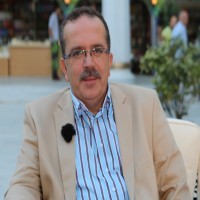
Müfit Selim Saruhan
Prof. Dr. Müfit Selim SARUHAN ANKARA ÜNİVERSİTESİ, İLAHİYAT FAKÜLTESİ Web
Bitlis’te doğdu (1969). Ankara Üniversitesi İlahiyat Fakültesi’ni bitirdi (1992).
İslam Felsefesi alanında, İslam Düşüncesinde İstiare-Metafor konulu teziyle Yüksek Lisansını (1994),
İslam Ahlak Felsefesinde Bilgi ve Hürriyet başlıklı çalışmasıyla da doktorasını Ankara Üniversitesi’nde tamamladı (2000).
Aynı üniversitenin İlahiyat Fakültesi’nde doçent (2008) ve profesör (2013) oldu.
Kırgızistan, Romanya, İtalya ve Kazakistan’da misafir öğretim üyesi olarak bulundu.
Alanı ile ilgili 2023 itibari ile yayımlanmış kitapları (8), ulusal ve uluslararası düzeyde kitap bölümleri (30), editörlük(2) çalışmalarının yansıra makale (50) ve bildirileri (32) bulunmaktadır. Ankara Üniversitesi İlahiyat Fakültesi İslam Felsefesi Anabilim Dalı’nda öğretim üyesi olarak görev yapmaktadır.Atatürk Kültür Dil ve Tarih Yüksek Kurumu Atatürk Kültür Merkezi Bilim Kurulu Asli Üyesidir.
H indeksi:13
Scholar
İ 10 indeksi:14
Wos indeks 11
Scopus İndeks 8
Islamic Philosophy
Ahmet Hakkı Turabi
Prof. Dr. Ahmet Hakkı TURABİ Division of Turkish Religious Music, Amasya University, Faculty of Theology, Amasya, Türkiye
Religious Music, Musicology and Ethnomusicology, Turkish Music
Esra Atmaca
Assoc. Prof. Dr. Esra ATMACA Sakarya Üniversitesi İlahiyat Fakültesi
Political and Civilization History of Islam, History of Muslim Turkish Countries and Societies, History of Islam
Default avatar
Dr. Kübra ÇİÇEKLİ Diyanet İşleri Başkanlığı
Tafsir
Yaşar Seracettin Baytar
Assoc. Prof. Dr. Yaşar Seracettin BAYTAR DİYANET İŞLERİ BAŞKANLIĞI Web
Arabic Language and Rhetoric
Default avatar
Assoc. Prof. Dr. Mustafa ÇAKIR DİYANET İŞLERİ BAŞKANLIĞI DİN İŞLERİ YÜKSEK KURULU
Islamic Law
Default avatar
Dr. Esma GÜNER Diyanet İşleri Başkanlığı
Kalam
Elif Erdem
Dr. Elif ERDEM ANKARA SOSYAL BİLİMLER ÜNİVERSİTESİ
Hadith
Mustafa Necati Barış
Prof. Dr. Mustafa Necati BARIŞ ANKARA HACI BAYRAM VELİ ÜNİVERSİTESİ İLAHİYAT FAKÜLTESİ İSLAM TARİHİ VE SANATLARI BÖLÜMÜ İSLAM TARİHİ ANABİLİM DALI
Political and Civilization History of Islam, History of Islam
Hüseyin Arı
Dr. Hüseyin ARI Diyanet İşleri Başkanlığı
Islamic Law, Islamic Sects
Default avatar
Dr. Rukiye AYDOĞDU DEMİR Diyanet İşleri Başkanlığı
Hadith
Lamia Levent Abul
Dr. Lamia LEVENT ABUL DİYANET İŞLERİ BAŞKANLIĞI
Religion, Society and Culture Studies, Sufism
Default avatar
Assoc. Prof. Dr. Abdülkadir ERKUT Diyanet İşleri Başkanlığı
Tafsir
Talip Ayar
Prof. Dr. Talip AYAR ANKARA HACI BAYRAM VELİ ÜNİVERSİTESİ, İLAHİYAT FAKÜLTESİ
Ottoman Institutions and Civilization, History of Islam
Yusuf Acar
Prof. Dr. Yusuf ACAR SELÇUK ÜNİVERSİTESİ, İLAHİYAT FAKÜLTESİ

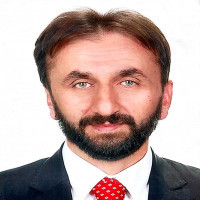
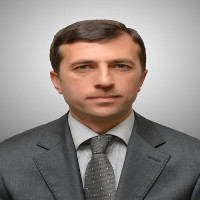
Konya/ Hadim Çuna Köyü’nde 1967’de doğdu. Karaman İmam-Hatip Lisesi, Selçuk Üniversitesi İlahiyat Fakültesi ve DİB Selçuk Dini Yüksek İhtisas Merkezi mezunudur. İlçe müftülüğü, Eğitim Merkezi Eğitim Görevliliği, Din Hizmetleri Ataşeliği ve vaizlik olmak üzere uzun süre Diyanet İşleri Başkanlığında çalıştı. 2019 Yılında Selçuk Üniversitesi İslami İlimler Fakültesi Hadis Anabilim Dalı Öğretim Üyesi olarak atandı ve halen bu görevini sürdürmektedir. Arapça, Fransızca ve Almanca bilmektedir. Üniversitedeki çalışmalarının yanı sıra Acar, Dr. Nuruddin Boyacılar hocadan okuyup icazetini aldığı hadis ilimlerine dair temel eserleri aynı yöntemle beş yıldır İkra’r Gençlik Merkezi bünyesinde ‘İhtisas Hadis Okumaları’ adlı lisansüstü düzeydeki program çerçevesinde okutmaktadır.
Selçuk Üniversitesi Sosyal Bilimler Enstitüsü bünyesinde Hadis Bilim Dalından 2000 yılında yüksek lisansını ve 2011’de de doktorasını tamamladı. Aynı branşta 2017 yılında doçent ve 2022 senesinde de Profesör oldu. Hayattakilerin Yaptığı İbadet ve Kıraatten Ölülerin Faydalanması Meselesi, Kuraşî’nin Hadisçiliği ve el-İnâye Adlı Eseri, Kardeşlik Ahlakı ve Sorumluluğu, Endülüs Hadisçiliği ve İbn Abdilber’in Hadis-Sünnet Anlayışı, Eser-Re’y Ayrışmasında Buhârî-Şâfiî İlişkisi adlı yayımlanmış kitapları vardır. Ebû Gudde serisine Üç Büyük İmamın Faziletleri (el-İntikâ) ve İsnadın Dindeki Önemi/ İsnad Dindendir adlı iki tercümesiyle katkı vermiştir. Mevlana’nın Mesnevî’sinin Arapça tahkik ve ta’lîkini de yapan Acar’ın çok sayıda yayımlanmış makalesi bulunmaktadır. yusufacar42@gmail.com.
Hadith
Tacetdin Bıyık
Assoc. Prof. Tacetdin BIYIK İNÖNÜ ÜNİVERSİTESİ, İLAHİYAT FAKÜLTESİ, İSLAM TARİHİ VE SANATLARI BÖLÜMÜ, TÜRK DİN MUSİKİSİ ANABİLİM DALI
Turkish Islamic Literature, Religious Music, Ottoman Institutions and Civilization
Bayram Köseoğlu
Assoc. Prof. Dr. Bayram KÖSEOĞLU Diyanet İşleri Başkanlığı
Tafsir
Fatih Kanca
Assoc. Prof. Dr. Fatih KANCA YILDIRIM BEYAZIT ÜNİVERSİTESİ, İSLAMİ İLİMLER FAKÜLTESİ
Recitation of the Qur'an and Qiraat, Tafsir
Tahir Dağcı
Assoc. Prof. Dr. Tahir DAĞCI KARAMANOĞLU MEHMETBEY ÜNİVERSİTESİ
Sociology of Religion

Advisory Board

Enver Osman Kaan
Assoc. Prof. Enver Osman KAAN Diyanet İşleri Başkanlığı
Philosophy of Economics, Religion, Society and Culture Studies, Islamic Law
Default avatar
Prof. Dr. Ayşe Esra ŞAHYAR Marmara Üniversitesi İlahiyat Fakültesi
Religion, Society and Culture Studies, Hadith
Şehmus Demir
Prof. Dr. Şehmus DEMİR GAZİANTEP İSLAM BİLİM VE TEKNOLOJİ ÜNİVERSİTESİ
Tafsir
İhsan Çapcıoğlu
Prof. Dr. İhsan ÇAPCIOĞLU Ankara Üniversitesi İlahiyat Fakültesi Felsefe ve Din Bilimleri (Din Sosyolojisi) Anabilim Dalı. Web
Sociology of Religion, Psychology of Religion, Religion, Society and Culture Studies
Hülya Alper
Prof. Dr. Hülya ALPER MARMARA ÜNİVERSİTESİ
Religion, Society and Culture Studies, Kalam
Mehmet Ünal
Prof. Dr. Mehmet ÜNAL ANKARA YILDIRIM BEYAZIT ÜNİVERSİTESİ
Recitation of the Qur'an and Qiraat, Tafsir
İlyas Çelebi
Prof. Dr. İlyas ÇELEBİ ISTANBUL 29 MAYIS UNIVERSITY
Islamic Sects, Kalam
Muammer Cengil
Prof. Dr. Muammer CENGİL It is not affiliated with an institution
Applied and Developmental Psychology, Religion, Society and Culture Studies
Mürteza Bedir
Prof. Dr. Mürteza BEDİR İSTANBUL 29 MAYIS ÜNİVERSİTESİ
Bioethics, Law and Religion, Legal History, Islamic Law
Gürbüz Deniz
Prof. Dr. Gürbüz DENİZ ANKARA ÜNİVERSİTESİ
Islamic Philosophy
Abdullah Kahraman
Prof. Dr. Abdullah KAHRAMAN MARMARA ÜNİVERSİTESİ Web

1964 Bayburt doğumlu, Marmara İlahiyat ve Sosyal bilimler mezunu. 

Islamic Law

Editorial Board

Lamia Levent Abul
Dr. Lamia LEVENT ABUL DİYANET İŞLERİ BAŞKANLIĞI
Religion, Society and Culture Studies, Sufism
Default avatar
Asst. Prof. Dr. Hatice BOYNUKALIN İSTANBUL 29 MAYIS ÜNİVERSİTESİ
Islamic Law
Necmeddin Güney
Prof. Dr. Necmeddin GÜNEY NECMETTİN ERBAKAN ÜNİVERSİTESİ, İLAHİYAT FAKÜLTESİ Web

Dr. Güney graduated from the Faculty of Theology at Selçuk University in 2003. He began his academic career as a research assistant in Islamic Law at the same faculty in 2005. In 2006, he completed his Master's thesis in Islamic Law, and in 2013, he finished his doctoral dissertation on Islamic law of obligations. While pursuing his PhD, he also graduated from Anadolu University with a degree in Economics through the Open Education program.

Dr. Güney has served as a visiting researcher at Columbia University in New York for one year in 2009 and at the Islamic Research and Training Institute (IRT) in Jeddah for two months in 2018. He was promoted to Associate Professor in 2020. He currently serves as a faculty member in the Department of Islamic Law at Necmettin Erbakan University and also teaches as a visiting faculty member in the Department of Islamic Economics and Finance at KTO Karatay University.

Islamic Economy, History of Economics, Participation Banking, Takaful (Participation) Insurance, Islamic Finance, Islamic Microfinance, Islamic Law

Review Committee

Lamia Levent Abul
Dr. Lamia LEVENT ABUL DİYANET İŞLERİ BAŞKANLIĞI
Religion, Society and Culture Studies, Sufism
Default avatar
Savaş ÖZDEMİR DİYANET İŞLERİ BAŞKANLIĞI
Kalam
Default avatar
Dr. Kübra ÇİÇEKLİ Diyanet İşleri Başkanlığı
Tafsir
Default avatar
Assoc. Prof. Dr. Mustafa ÇAKIR DİYANET İŞLERİ BAŞKANLIĞI DİN İŞLERİ YÜKSEK KURULU
Islamic Law
Default avatar
Assoc. Prof. Dr. Abdülkadir ERKUT Diyanet İşleri Başkanlığı
Tafsir